HAPI MKIII manual
Introduction to HAPI MKIII

HAPI – Modular by Design
HAPI, the son of Horus …
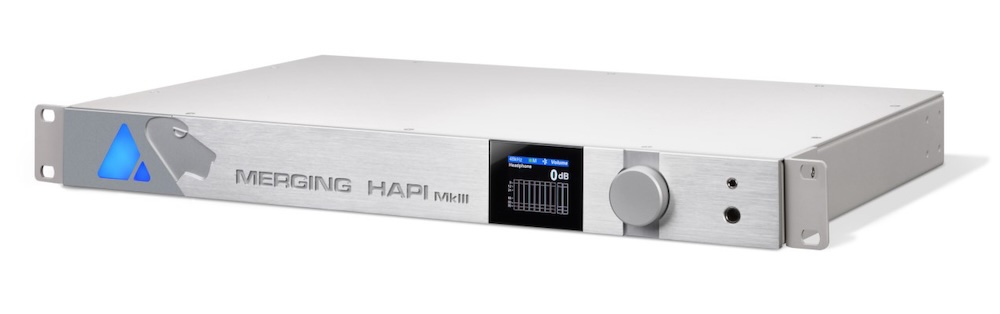
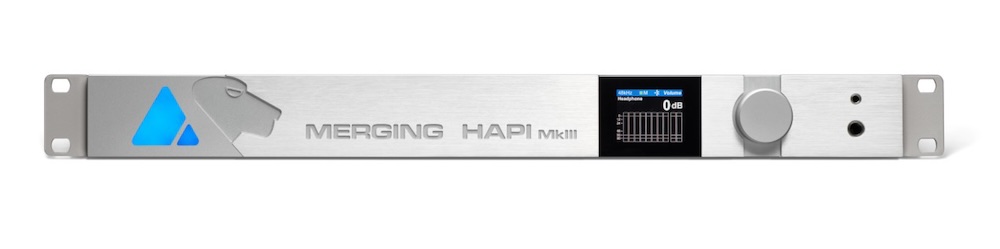
Born from the most flexible and sonically transparent audio interface and providing the same RAVENNA / AES67 connectivity as its father, Hapi is both the perfect primary interface for smaller systems as well as the ultimate accessory for a system using Horus where control room I/O is required. Hapi was designed to give its users an Audio I/O channels flexibility while offering an unprecedented level of quality in such a small form factor.
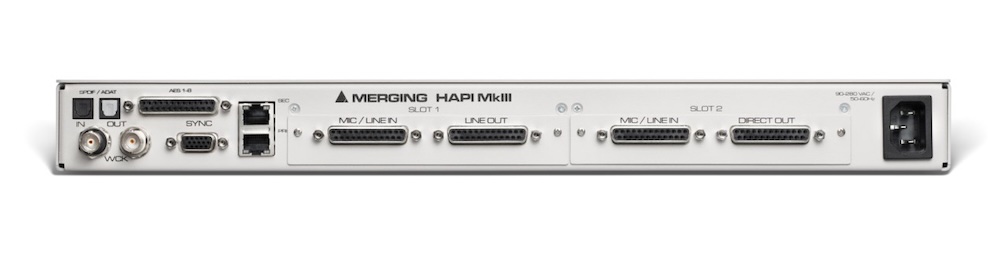
Providing as standard; 8 channels of AES-EBU I/O plus 8 ADAT or 2 SPDIF I/O (on TOSLINK) and 2 Network interfaces 2 slots for AD8D/AD8P, DA8/DA8P, MADI or PT64 option cards. Once the Hapi is fully loaded with option cards, it can achieve 88 inputs and 90 outputs @ 1FS. There are indeed 2 more output channels than input channels, including Stereo Headphone Monitoring.
Route Signal Anywhere
Hapi has been designed so that any input can be routed to any number of outputs as required simultaneously. With comprehensive routing pages accessible both locally on the touchscreen and by remote access using a standard web browser, Hapi is the answer to signal flow management in your studio.
Green Built
For environmentally conscious users, Hapi has been designed meticulously in order to keep power consumption at an incredible minimum. A fully loaded Hapi running all channels of phantom power will only draw about 30W, making it more affordable to run than your kitchen lights.
HAPI MKIII Key Features
- Up to 152 inputs and 154 outputs @1FS
- 8x AES/EBU + 8x ADAT or 2x SPDIF (Optical)
- Standard modules support 44.1kHz to 192kHz and Premium up to DXD/DSD256.
- Signal routing from any input to any combination of outputs
- RAVENNA/AES67 Compatible
- RAVENNA/AES67 Hapi MKIII supports Network ST2022-7 redundancy and Network Switch mode
- Dante Ready™ (requires Dante firmware & licence plan)
- Dante Network Redundancy and Switched mode support (requires Dante firmware & license plan)
- DA4:36 PM Compatible
- DA4:36 PM Redundancy Support
- Browser-based remote access using any web enabled device
- AC or DC power supply options
- Modular design for additional analog and Digital I/O
- Near-zero latency from in to out (<1ms)
- Main rotary control button
- ST2022-7 Support (Seamless Protection Switching)
- Network Switch mode support (allowing daisy chain for an extra network device)
- Additional Roll Off filters
- Per channel DA Trims level and polarity support
- Per channel Headphones Trims level and polarity support
- Routing support with per channel support
- Mastering grade Headphone Amp
- Powerful Headphone Amp suitable for ultra-low to very high impedance headphones.
- Headphones DSD volume support (DSD64, DSD128, DSD256)*
- Headphones DSD256 support*
- OLED display for local control access * The Dante mode does not support 8FS, DXD or DSD formats.
RAVENNA
The Hapi has been designed so that the MADI, AES, SPDIF/ADAT, PT64 and Analog modules can all feed into or take their sources from the network over RAVENNA streams, providing up to 88 channels of I/O @ 1FS over a single CAT5e or CAT6 cable to any other RAVENNA devices on the network.
The RAVENNA connection on the Hapi allows for not only audio, but also control and sync information to flow through as well. Send Timecodes and Word clock directly to the Hapi unit over the same network as your audio. The RAVENNA port even provides remote control access to the configuration and entire routing of the unit itself! Support for: LTC/Video Ref/WCK
RAVENNA is a layer 3 IP based protocol. In environments where existing networks are already in place, RAVENNA subnets can slip right into place with no additional outlay. In laymen’s terms, this means that you can connect your Hapi to a properly configured network exactly as you would your PC or Mac, with no additional technology required.
RAVENNA is a “mission critical” protocol, meaning that is has been designed to ensure immensely low jitter rates and latencies (sub-millisecond) and ensures that every single sample gets to where it needs to go without fail. Hapi MKIII provides a secondary (RJ45), redundant RAVENNA connection for uninterrupted use, even when a network connection fails, it can also be used in switch mode.
Refer to the RAVENNA User Guide and the MassCore-RAVENNA Configuration Guide for more details.
DANTE
Dante by Audinate is one of the leading closed AoIP ecosystems, offering a comprehensive set of software, hardware and network protocols to deliver uncompressed networked audio.
Dante is the product name for a combination of software, hardware, and network protocols that delivers uncompressed, multi-channel, low-latency digital audio over a standard Ethernet network using Layer 3 IP packets. Developed in 2006 by the Sydney-based Audinate, Dante builds on previous audio over Ethernet and audio over IP technologies.
Like most other audio over Ethernet technologies, Dante is primarily for professional, commercial applications. Most often, it is used in applications where a large number of audio channels must be transmitted over relatively long distances or to multiple locations.
Digital audio provides several advantages over traditional analog audio distribution. Audio transmitted over analog cables can be adversely affected by signal degradation due to electromagnetic interference, high-frequency attenuation, and voltage drop over long cable runs. Thanks to digital multiplexing, the cabling requirements for digital audio distribution are almost always reduced when compared to analog audio. Dante also provides specific advantages over first-generation audio over Ethernet technologies, such as CobraNet and EtherSound. Technological advancements include native gigabit support, higher channel count, lower latency, and automatic configuration.
Refer to the Hapi MkIII Dante Appendix for all details on Dante.
The Hapi MKIII is delivered without a Dante license, the license must be purchased separately.
To operate in Dante mode, it requires that the Hapi MkIII Dante firmware is updated in the unit.
Refer to the Dante Set Up guidelines for all details.
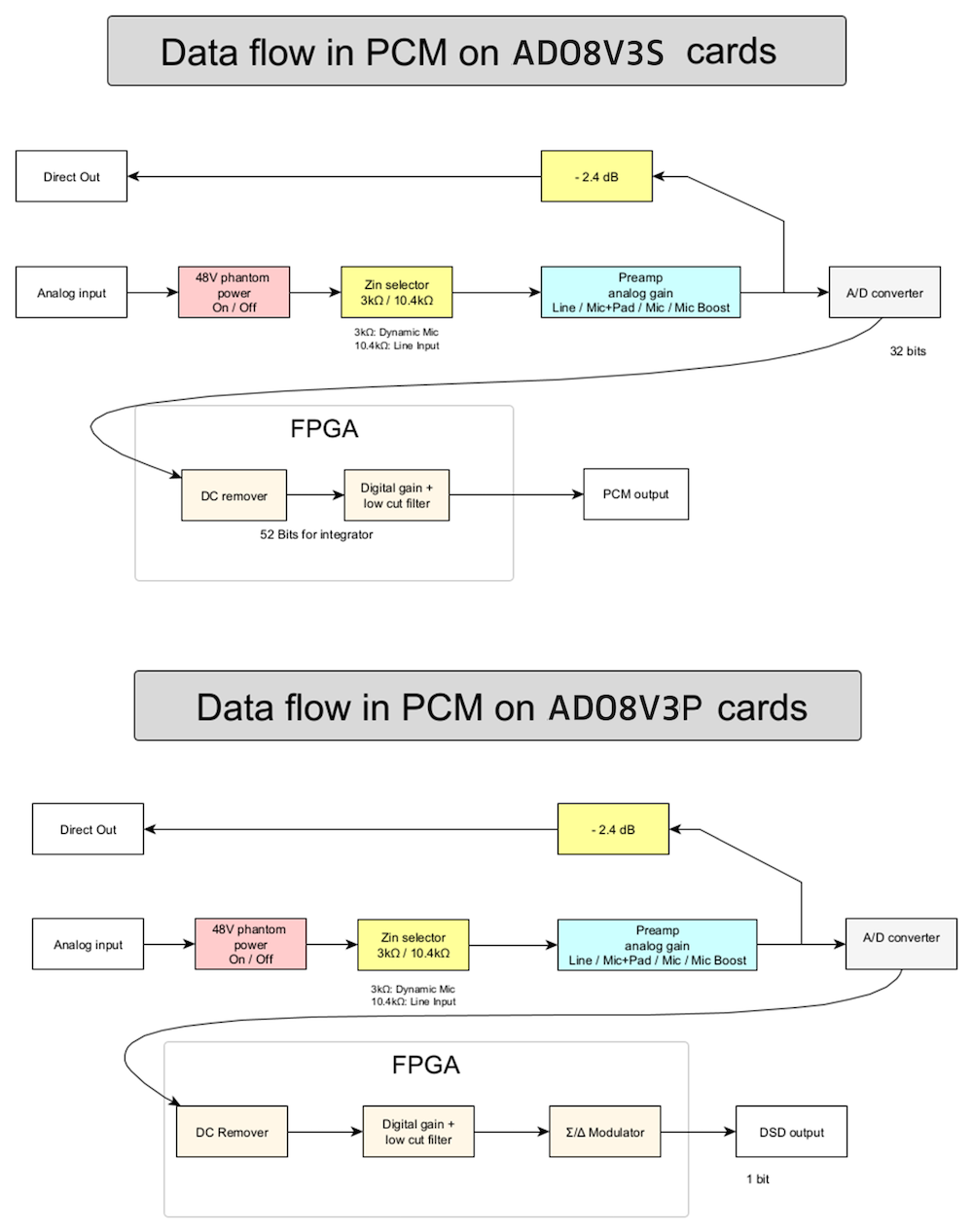
Data Flow
↻ 2025